Up here in the North, we don’t just eat in our dining rooms. We sit there long after the food is gone, candles burned down to stubs, talking until the windows go dark. The dining room is where the day slows. Where you remember what matters.
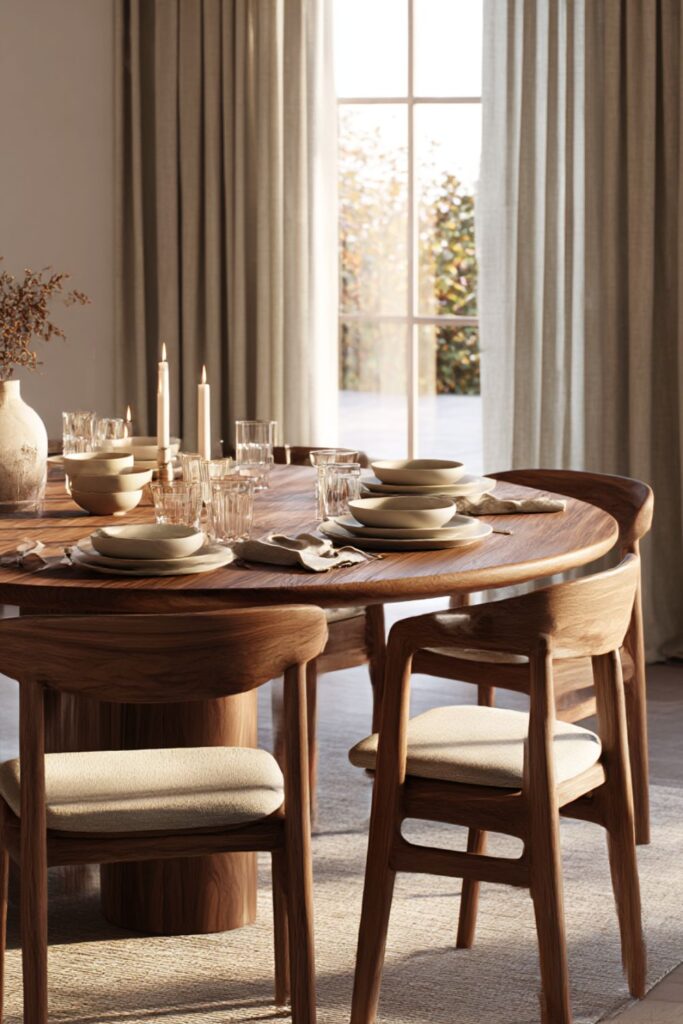
But creating that feeling? It’s not about buying a “Scandinavian-style” table from a big box store and calling it a day. I’ve been in enough Nordic homes. Both the ones that work and the ones that don’t. The difference is clear. The best dining rooms feel accidental, like they just happened. But they’re not accidental at all. Every choice is deliberate, personal, and rooted in how we actually live.
Let me show you how to build one.
(Quick note: Some links above may be affiliate links, meaning I might earn a small commission if you purchase, at no extra cost to you. I only recommend pieces I’d use in my own home.)
The Table: Start With the Right Shape
Everyone wants a big oak table. And sure, oak is beautiful. But in a smaller space, or a room that needs to feel lighter, consider something unexpected.
An oval table changes everything. Conversations flow differently when you can see everyone. There are no awkward corner seats where someone’s staring at a wall. The curved edges soften the room, make it feel less rigid. And practically? You can fit more people when needed.
If you go rectangular, let it breathe. Leave at least 90 centimeters on each side for chairs to slide back comfortably. A crammed dining room isn’t cozy. It’s claustrophobic. The best Scandinavian spaces have room for movement, for leaning back, for putting your feet up on a chair after dinner.
I found this extendable oval table in natural walnut that embodies exactly this philosophy. It seats four to six comfortably, expands when you need it, and that warm wood tone only gets better with age.
→ Japandi Oval Extendable Dining Table
The Chairs: Mix, Don’t Match
Here’s a secret the furniture stores don’t tell you. The most interesting Scandinavian dining rooms mix their chairs. Not randomly. There’s a quiet logic to it.
Maybe it’s four matching wooden chairs, plus a bench on one side. Or six of the same chair, but two in a different color. Or a vintage find from your grandmother mixed with something new.
The key is keeping something consistent. Material, color temperature, or silhouette. If everything matches perfectly, it looks like a furniture showroom. If nothing connects, it looks like a yard sale. The sweet spot is in the middle.
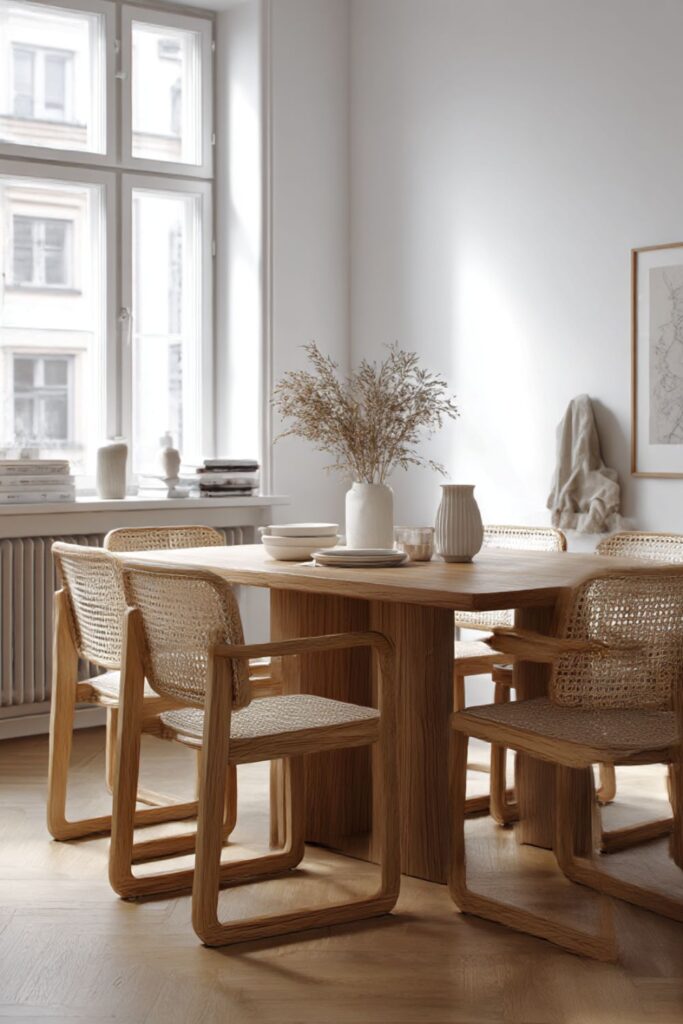
These Japandi-style wooden chairs in natural finish work beautifully because they’re simple enough to mix. Their clean lines let other pieces shine, but they’re interesting enough to stand on their own.
→ Japandi Wood Dining Chairs (Set of 2)
Consider adding a bench on one side, too. It changes the dynamic completely. More casual, more flexible, and somehow more welcoming.
The Light: Lower Than You Think
This is non-negotiable. A dining room without a proper pendant light is just a room with a table in it.
The rule we follow in Scandinavia: hang it low. Lower than you think. About 75 to 80 centimeters above the table surface. When you’re seated, you want the light to feel intimate, enveloping. Not blasting down from the ceiling like an interrogation room.
Paper, linen, or ceramic shades work best because they soften the light. Metal can work too, but only if paired with a warm bulb and ideally a dimmer. The goal is that golden-hour glow, even at midnight.
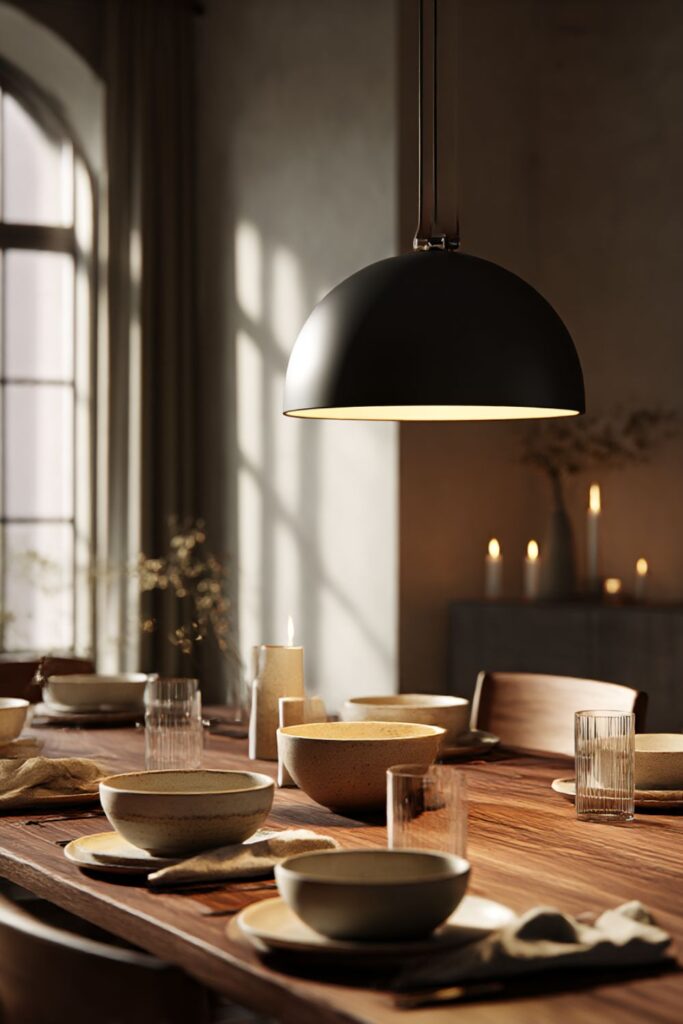
This Nordic pendant was literally designed with Scandinavian homes in mind. The metal spun shade comes in black, white, or brushed platinum, and at 20 inches, it’s substantial enough to anchor the space without overwhelming it.
→ Maxim Nordic 20″ Pendant Light
Textiles: The Soft Against the Hard
Wood on wood on wood gets tiring. You need something that breaks it up. A linen table runner that rumples naturally, a wool throw casually draped over a chair back, cotton napkins that soften with each wash.
Don’t overdo it. One textile element is often enough. The goal is contrast: rough against smooth, soft against hard, matte against polished.
Linen is the classic choice because it looks better wrinkled. Seriously. Ironed linen looks stiff and hotel-like. Let it be imperfect. Let it look like someone actually lives there.
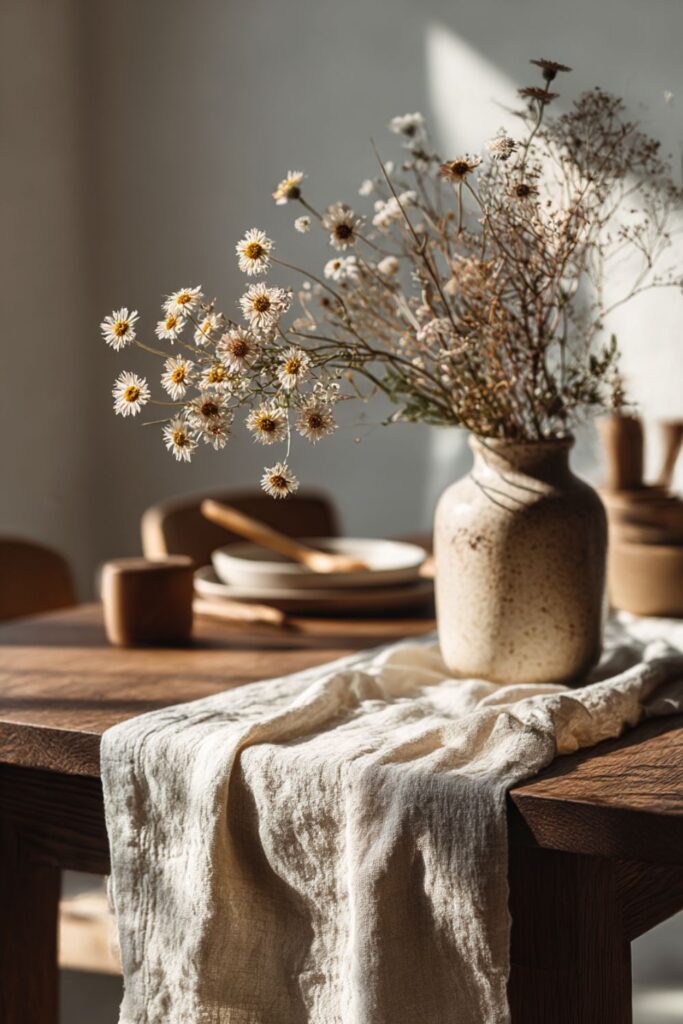
And that wool throw? Drape it over the back of a chair. Not neatly folded. Casually, like someone just got up and left it there. That’s the difference between styled and lived-in.
The Personal Touch: Something That Doesn’t Belong
Every dining room needs one thing that doesn’t quite fit. Something personal. A ceramic vase you found at a flea market. A branch from your yard in a simple glass vessel. A painting that means something to you, even if it clashes slightly.
This is what separates a styled room from a real home. The imperfection. The story. The thing that makes guests ask, “Where did you get that?”
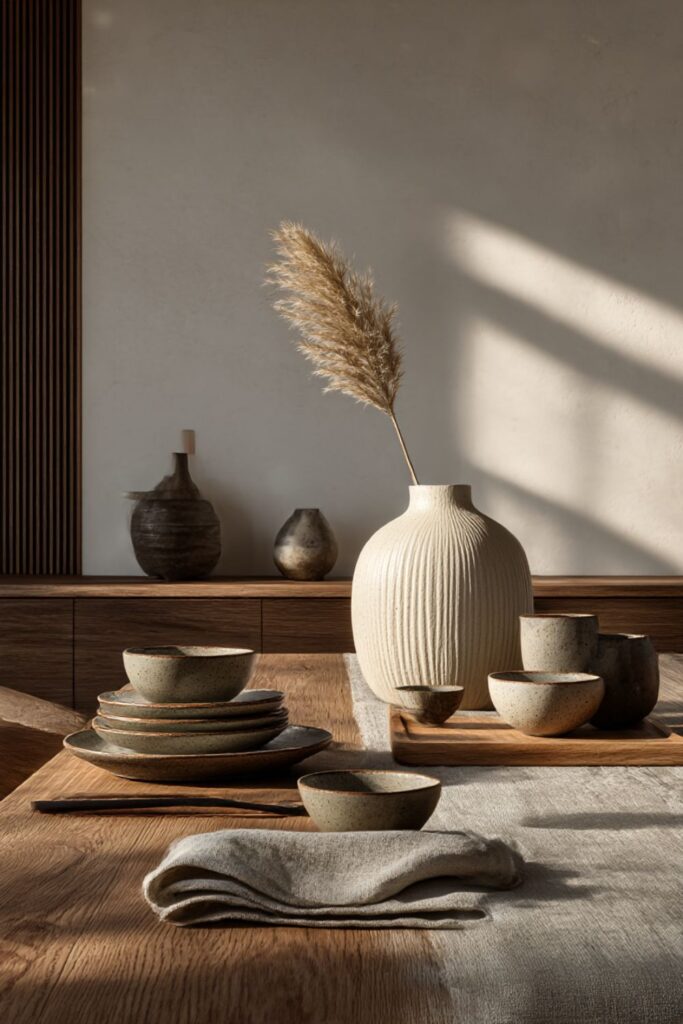
A sculptural ceramic vase in off-white or cream works beautifully because it’s versatile enough to hold anything. Fresh flowers in summer, bare branches in winter, nothing at all when you want simplicity.
→ Minimalist Sculptural Ceramic Vase
The Living Happens in the Mess
Here’s the truth. The best dining rooms aren’t finished. They evolve. A new candleholder found on vacation. A different table runner as seasons change. A plant that grew too big for the windowsill and moved to the table.
Start with the bones. The right table, chairs that coordinate without matching, a pendant light hung low, one or two textiles to soften everything. Get those right.
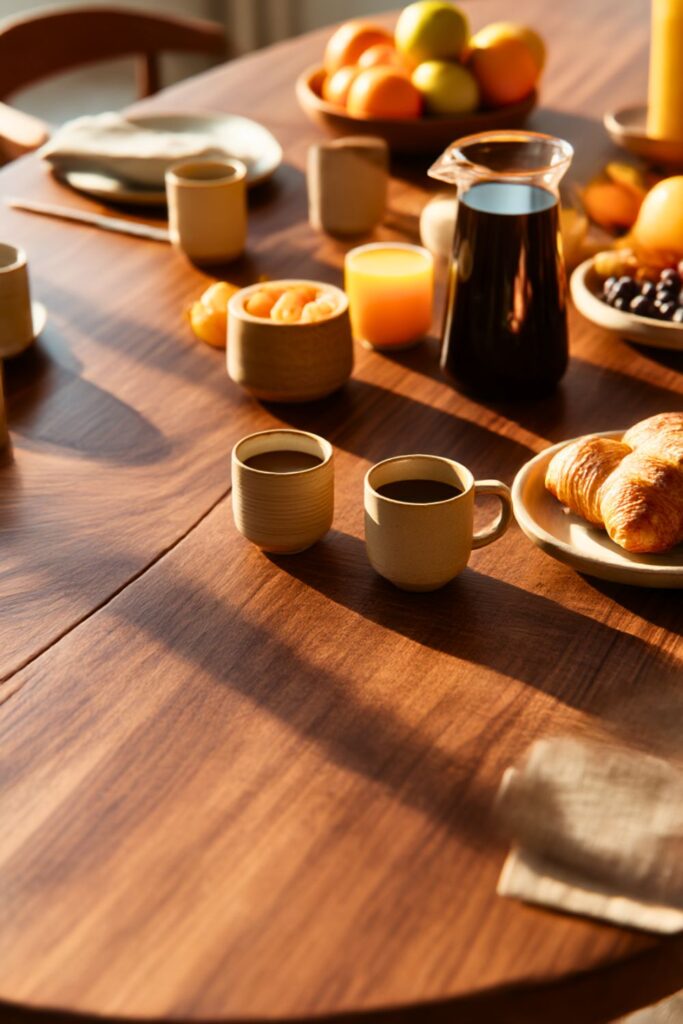
Then let the rest happen naturally. The coffee cups left after breakfast. The book someone was reading, left open on the table. The occasional flower in that ceramic vase.
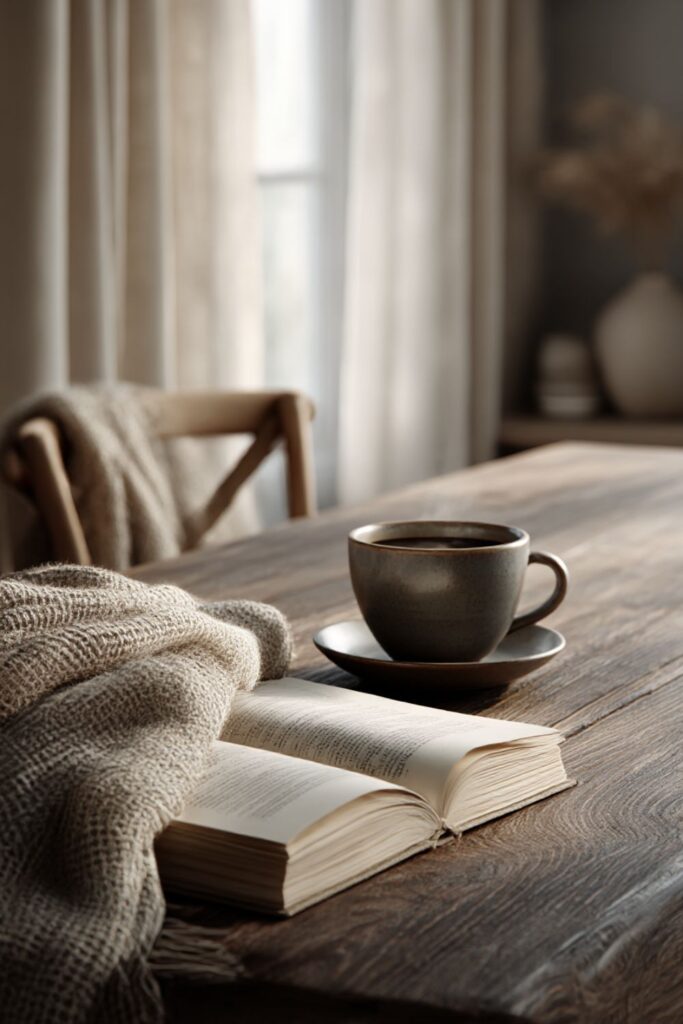
That’s what makes it cozy. Not the furniture. The living.
You might also like:
→ Scandinavian Warm Minimalist Kitchen: The Art of the Heart of the Home
→ The Unspoken Rules of Scandinavian Living Rooms
→ The Art of Scandinavian Lighting: How to Create a Warm, Intentional Atmosphere