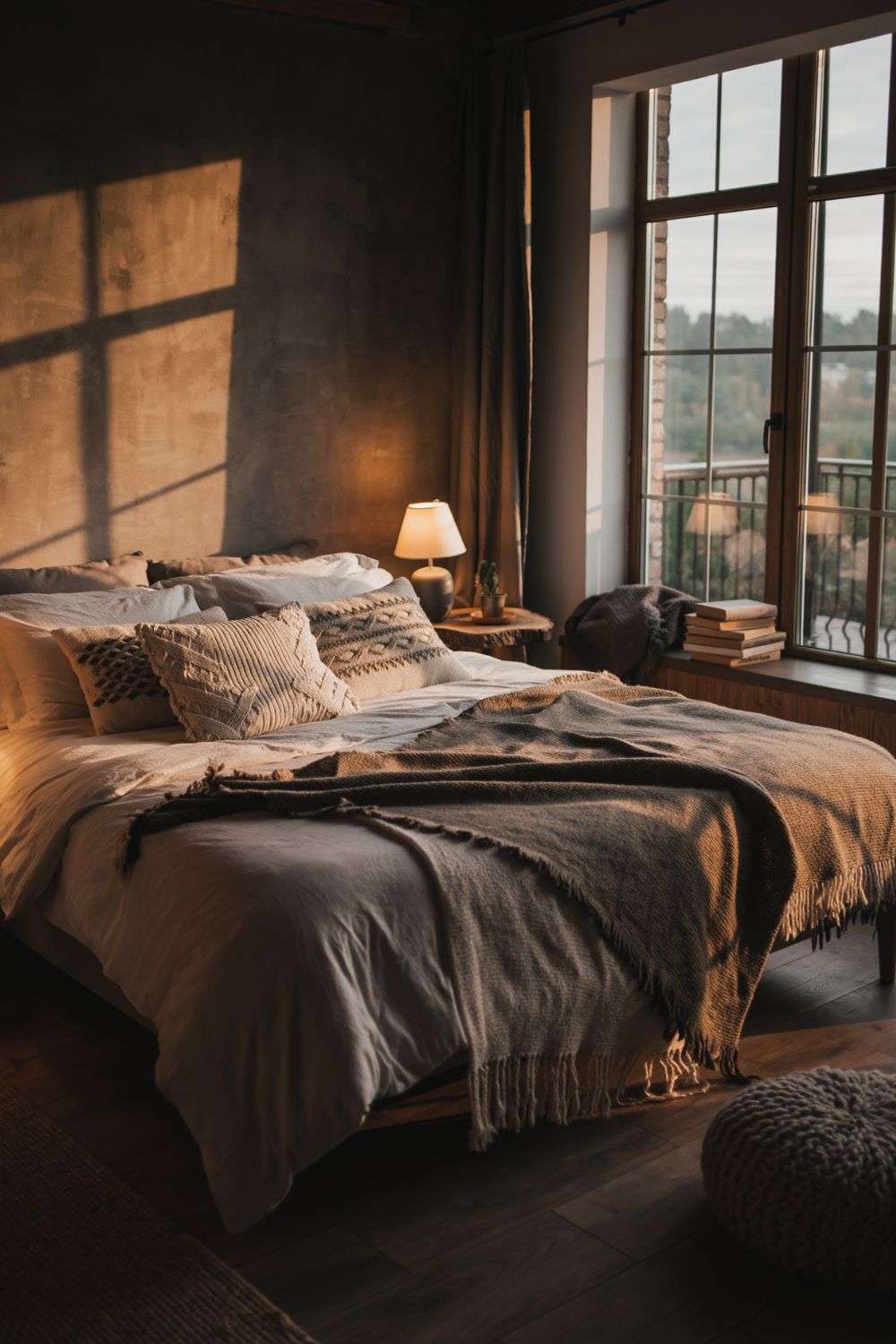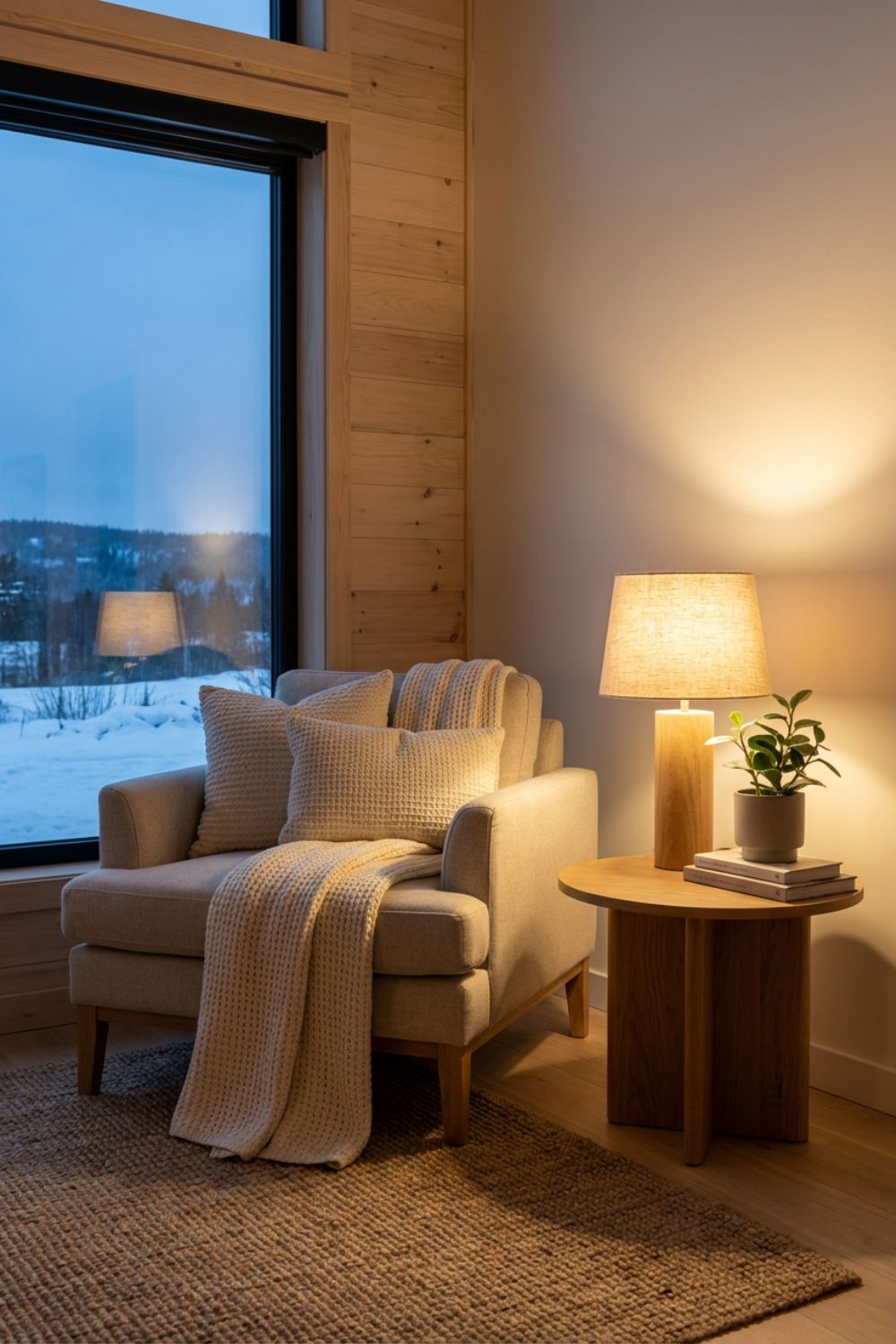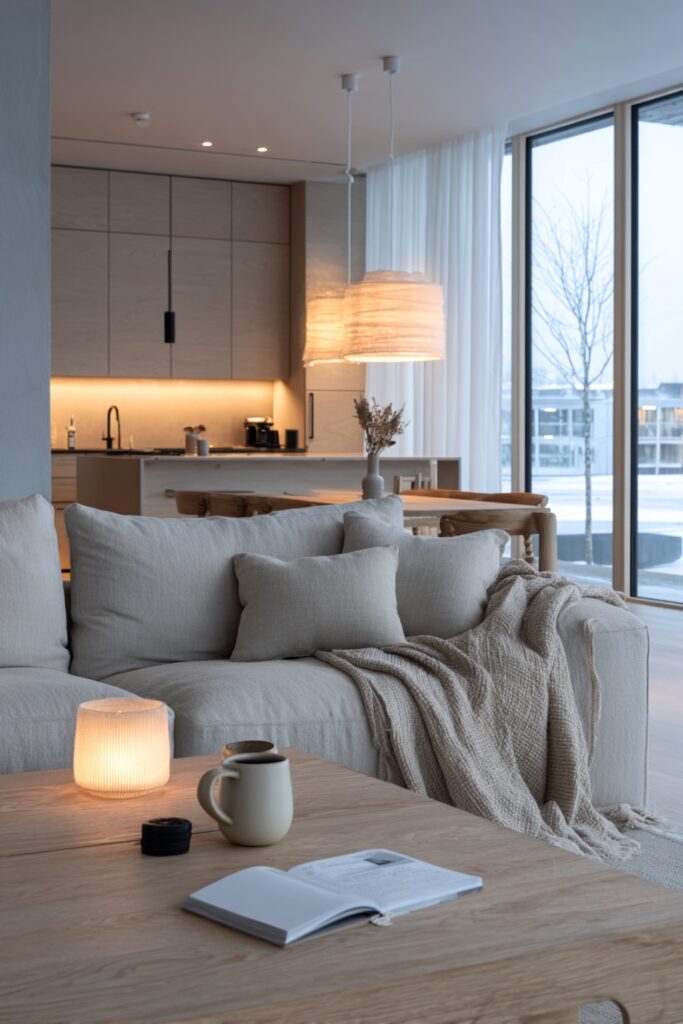
The unspoken rules of Scandinavian living rooms—they’re basically an inside joke that everyone knows, but nobody actually says out loud.
Step into a Scandinavian home on a winter night, and it just clicks. You come in from the icy street, and suddenly the room feels… different. Softer air, not glaringly bright, just this calm, golden light everywhere. Nothing’s shouting “designer!” but somehow every mug, every lamp, even that tossed blanket, just fits. You sit down and instantly, your shoulders drop. It’s not about decorating. It’s actual, honest relief.
Forget trends or “look at me!” furniture. Scandi homes run on these subtle design choices—rules you won’t find written down, but you feel them the second you walk in. Once you notice, you can totally copy the vibe.
(Quick heads up: I only recommend stuff I’d personally use. Some links might be affiliate, so if you buy something, I might get a small commission. It won’t cost you anything extra, just helps keep things running. Thanks!)
Rule 1 — Lose the Overhead Light as the Main Deal
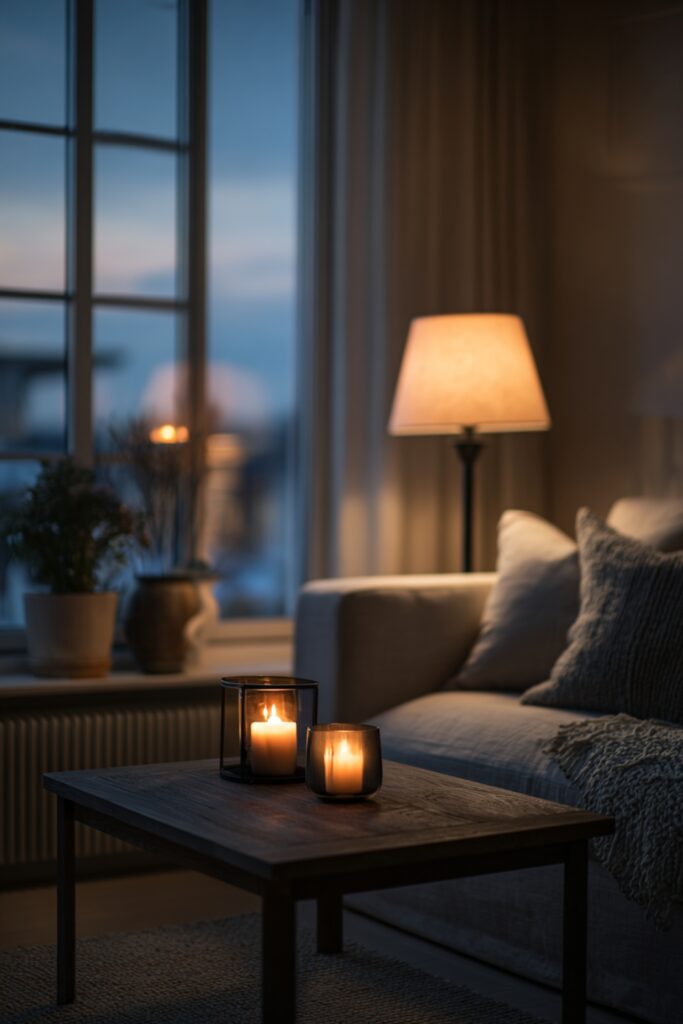
Overhead lights? Basically background noise in Scandinavia. The real mood comes from eye-level lights: floor lamps, table lamps, glowing window lights, candles. The whole place feels more alive, less like a dentist’s office.
Honestly, try it tonight. Turn off the big light, switch on a couple warm lamps. It’s like instant calm.
If you don’t already have a warm floor lamp or table lamp, adding one can completely change how your living room feels at night.
Rule 2 — Furniture Needs Space to Breathe
Ever notice how nothing’s crammed up against the wall in those flawless Pinterest rooms? Even tiny gaps—behind a sofa, around the coffee table, between a lamp and the wall—make everything feel lighter.
Your mind picks up on it, even if you don’t. More space = calm. Packed in = tense.
It’s not about being a minimalist hermit. Just giving your eyes somewhere to rest.
Rule 3 — Texture Should Be Lived-In, Not Just for Looks
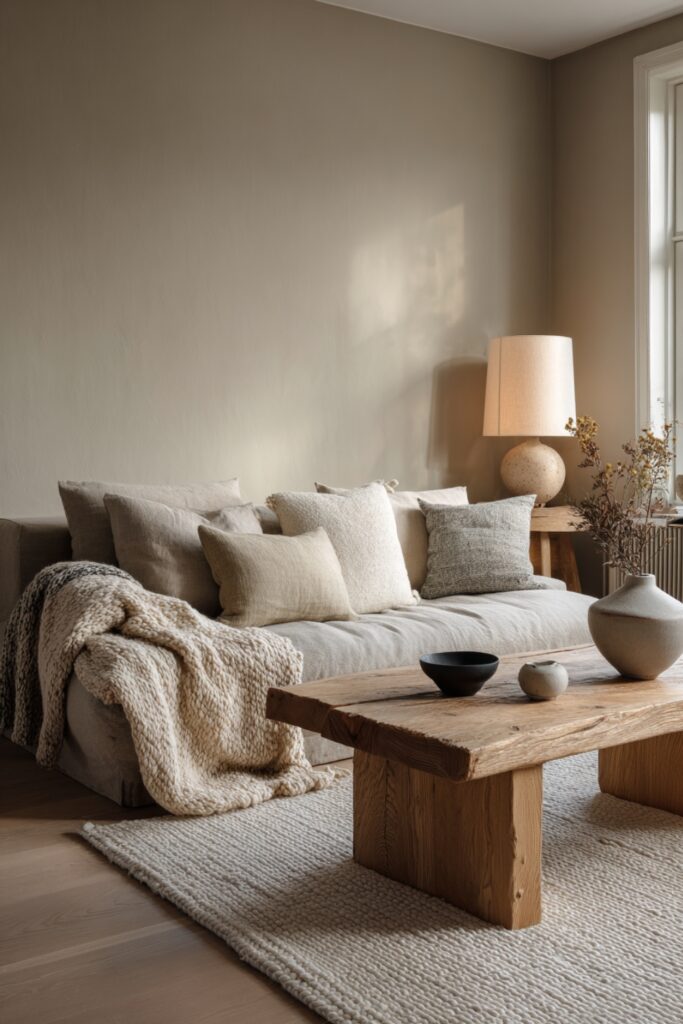
Textiles in a Scandinavian home aren’t for display. They’re there to be used and a little worn. Real wool, chunky linen, cotton you can actually touch, rugs that look like they’ve had a life. If something’s too glossy or perfect, it feels wrong.
A throw blanket should actually look like someone’s been napping under it all week. (Because honestly, they probably have.)
For example, a neutral wool and jute rug like this can instantly add real, lived-in Scandinavian texture without feeling overly styled.
Rule 4 — Warmth Comes from Mixing Materials, Not Flashy Colors
You won’t see a ton of bold color mixes. It’s all about layering: wood with fabric, stone with wool, metal with linen, leather with something super soft. It makes the place feel cozy without being loud.
A black metal lamp next to a linen chair and a wooden table? Perfect. It’s all about what’s next to what.
Rule 5 — One Statement Piece (But Keep It Low-Key)
There’s always one thing in the room that quietly ties it together. Not a neon sculpture or a couch the size of a van. Just something solid and intentional—a sculptural chair, a beautiful wooden coffee table, a lamp that’s basically art. The trick is not to overdo it. If everything’s a standout, nothing stands out.
Rule 6 — Lighting Should Evolve as Night Falls
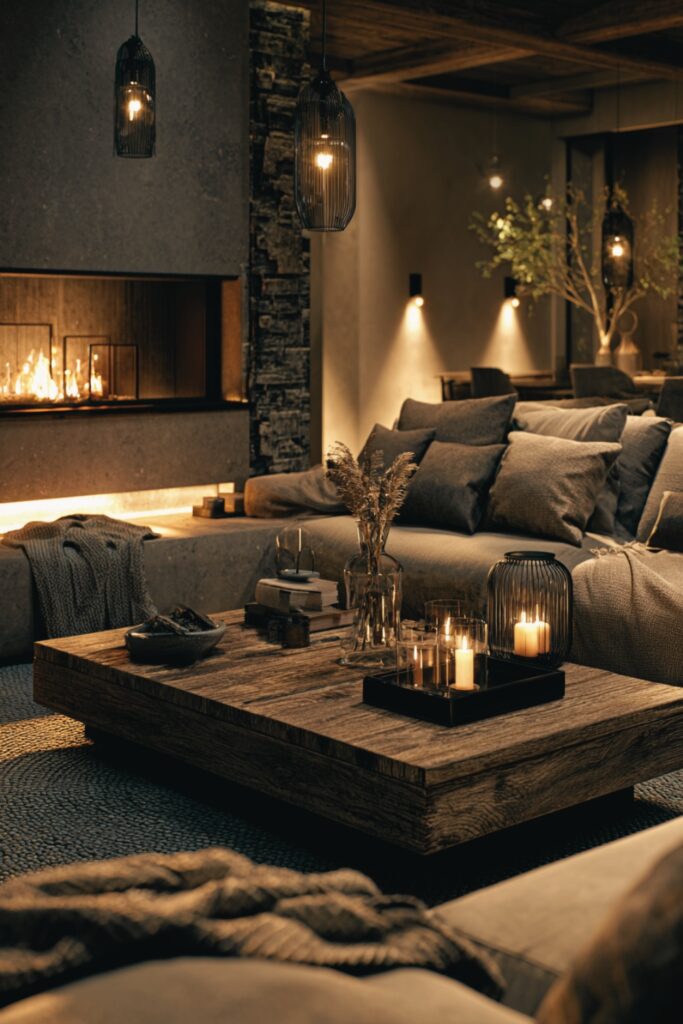
Scandi homes don’t just blast the same lighting from 5pm to midnight. It shifts: brighter and practical before dinner, softer and layered at dusk, then super mellow and glowy at night. The room kind of winds down with you.
Try this: afternoon? Floor lamp and whatever daylight you’ve got. Evening? Add a table lamp. Night? Lamps and a candle, that’s it. You’ll sleep better, promise.
For example, a warm, fabric-shaded floor lamp like this works beautifully as an evening light source — soft enough for winding down, but still practical for real everyday living.”
→ Thomas O’Brien Bryant Floor Lamp
🕯 Scandinavian Cozy Living Tool
Not sure how many lamps you actually need for a cozy living room?
Our Lighting Planner helps you:
- Plan warm light layers
- Avoid harsh overhead lighting
- Create real Nordic evening atmosphere
Rule 7 — Leave Some Corners Empty, Really
This is the one most people miss. You don’t have to fill every corner with a plant, a basket, or whatever. Empty space counts. It’s like a pause in music—it lets the rest of the room breathe.
In Scandinavia, a quiet corner isn’t incomplete. It’s on purpose. Visual silence is part of the whole thing.
The Scandinavian Secret Sauce
Want to get the vibe? Here’s the mix: side lighting, tactile textiles, mixing natural materials, one grounding piece, lighting that winds down with the day, and leaving some corners bare. Don’t pile on more stuff—just balance what’s already there.
At the end of the day, Scandinavian rooms aren’t memorable because they’re flawless. They stick with you because they feel safe, like you could actually live there. No pressure, no chaos, no trying too hard.
Just a space that lets you be. Quiet mornings, lazy evenings, and all those small routines that make home feel… well, like home.
Because in the end, real coziness isn’t about how a room looks.
It’s about how you feel when you finally sit down at the end of the day. – Scandinavian Cozy Living
You might also like:
→ How to Make a Small Bedroom Feel Calm, Cozy and Scandinavian
→ How to Create a Cozy Scandinavian Living Room Corner That Truly Feels Warm
→ 5 Scandinavian Floor Lamps That Make Living Rooms Feel Warmer and More Inviting